Tuesday, June 21, 2011

Youth Against Fascism III: The Eternal

By May of 2009, I had been in culinary school for a year and I could feel the pangs of transition much like 12 months earlier beginning to press actions into motion. Several months prior as 2008 segued into 2009, I had grown tired of the job position I was holding as the manager for a coffee and smoothie kiosk on the campus of DePaul University. The upper management and owners were condescending to anyone below them and the customer base - comprised entirely of entitled DePaul students who placed their orders with sneers of intellectual superiority and blase contempt as they made their way to the gym for their daily workouts - had tried my every nerve several times over. Meer days after 2009 nestled itself in on the calendars of the world, I felt that all the said world wasn't enough to keep me from taking a match and a can of gasoline to the building I was working in. Despite my bank account not having the tidiest sum of money in it, I quit the job after a particularly trying day and smiled all the way home.

An oasis of over privileged jocks and future trixies.

The main reason I entered into culinary school in the first place was to become a private vegan chef - making turkey clubs and 'Blue Demon' (the asinine mascot of the university) protein shakes while being barked at constantly by over stressed bosses and entitled suburban kids was not my idea of working towards my goals. Within days of quitting, I had placed an ad in Craigslist advertising personal chef services, secured the domain for a website and gotten things off to a start with my first client giving me a call within days of my the ad coming into existence. At the beginning of January, fresh off of having quit a job and taking such a large risk with getting a business started (nine months ahead of schedule as well since I wasn't planning on launching it until after my externship with a local restaurant wrapped up in August), one wouldn't be faulted for wondering where exactly February's rent would come from, but in between clientele and what little we had in the bank, we didn't find ourselves on the chilly Chicago streets begging by month's end (as I had initially envisioned in my several moments of crippling self doubt in the weeks after I pressed the reset button on my career). As each month rolled into the next, parties began to be booked along with a client who covered nearly all of our living expenses due to her desire to have us cook for her entire family.

When May arrived, we realized we were at the end of our lease and began looking for a better place elsewhere. A friend from Indiana had expressed interest in moving to Chicago and we figured it would be advantageous to get a place with him as we were looking for a bigger place than the one bedroom we were currently in anyway. Settling fairly quickly upon a three bedroom apartment along the borderline of Wicker Park and Humboldt Park, we began making the arrangements and (despite a fairly stressful moving day) made the shift seamlessly. Considerably larger than where we had been staying for a year, Mellie and I settled in fairly quickly and as the private chef business was making enough at this point to be recognized as legitimate enough for me to use it towards my final class hours out in the culinary field (I was the only one in my class to work as my own boss for my externship course), my schedule was flexible enough to begin settling in to resuming my writing and art.

Around this time, I found Mellie's copy of 'Washing Machine' in our CD collection. Having not heard all that much of it, I put it on the stereo and treated it like background noise as I went about whatever I was in the middle of at the time and as is the case with all Sonic Youth up to that point, my first impression wasn't the fondest. Certainly their sound was more meandering on this effort than their prior trilogy of releases where their sound had more than its fair share of grunge tinged production tricks and dirge-y alt rock shackles, but as is the case with most things worthwhile, I felt the need to listen to it further and as I did, I came to understand the full palette the band were working with. When treating the band's more experimental output as background wall paper, it's easy to miss many of the elements that make the band so great.

What I genuinely believe about SY is this: they're at their most comfortable when stretching themselves to the point of snapping their already established elasticity in an attempt to wring out just an inch or two more of space. Listening to 'The Diamond Sea', the final track (and the micro opus of the record with its quarter hour run time), the observer finds themselves floating amidst the crystalline waters of drone Moore and Renaldo cast and like Poseidon's effortless control over the waves as they peak and fall, so too do the guitarists craft feedback in shapes so visceral you can practically see them trickling out of the speaker and soaking the floor. During this stretch of time, Gordon and Shelly - shapers of restraint and holders of orders - step back even further from their duties and provide instrumentation so minimalist that Edgard Varese would have smiled ear to ear if he were sitting in the production chair as the clock arms marked off the minutes comprising this epic.

Our roommate - a chronically absent fellow who fancied supervising youth camps and street busking more than actually finding a viable means of income to help pay his share of the bills - happened to be around during one of the times 'Washing Machine' was playing. His then girlfriend was visiting him from Indiana and as the two moved about the apartment preparing for their day, they took turns making faces at the sounds coming from the stereo. Despite his love for the faux experimental posturing of Radiohead, the roommate viewed most of the more non 4/4 aligned music I listened to with a thinly veiled contempt. At the time, his musical tastes leaned towards the more contemplative end of the spectrum, the usual line of suspects hubs like Pitchfork.com lose their minds over any time one of them so much as burps or reads a contact number from their iPhone into a microphone. As the roommate himself was a musician and played fairly generic folk music, I often suspected his tastes towards the quieter elements of indie rock had to do with him preferring to hear mainly voices over instrumentation largely because he so enjoyed hearing his own.

Watching the roommate and his girlfriend as their faces all but told the story of what they thought of the music, I felt a slight tinge of satisfaction. Here before me sat an example of the dividing line between Sonic Youth's adherents - those who preferred their excursions into the avant garde and those who would forever hold them to the handful of records they recorded in the early 90's during the alternative revolution (important to note: that roommate - now back in his safe confines in Indiana where everything is handed to him and he doesn't have to deal with the challenges a big bad city like Chicago threw at him - has recently expressed that over the last year, his tastes in music have crept more towards the avant garde and the weird. He now rattles off lists of acts he enjoys wholeheartedly when only a little under a year and a half ago, he verbally dismissed nearly every single one of them when I would listen to them. A real johnny come lately).

Listening to 'Washing Machine' piqued my curiosity in the rest of SY's output for the next several months, a week didn't go by where I wasn't adding one of their records to my shelf in a diligent attempt to chip away at their full discography. The trip from 1995 onward proved to be even more a litmus test for the ne'er do well fan base they had accumulated via Lollapalooza and '120 Minutes' as their SYR series saw them releasing recordings forty five minutes or more in length of guitar drones on par with the finest Merzbow while the fourth release in the series 'Goodbye 20th Century' saw the band confirming what many long time fans knew by making their admiration for the composers of the 20th Century evident by way of doing re-interpretations of many of their compositions. 2000's 'NYC Ghosts and Flowers' witnessed the band making a minor mis-step as they clumsily attempted to hone their admiration for the more literary side of the avant garde to tape. Instead of coming off like the second coming of Ginsberg, the group as a collective ended up sounding more like a parody ala Judy, the faux Beat poet older sister of television cartoon Doug.

"Really Doug, they're just viola drones. Stop being such a pleb."

2002's 'Murray Street', 2004's 'Sonic Nurse' and 2006's 'Rather Ripped' came to be their redemption and acted almost as a career retrospective for the group with the first disc highlighting long, ambient guitar work outs set to a rock solid rhythm section and the second disc fusing that refined drone with the modern rock they had been known for to a generation prior. 'Rather Ripped' simply ripped with its ability to turn on and alternately tune out. A monster of riffs, the record was the most straight forward set they had recorded in over ten years and perhaps the more traditional structures the band chose to dress the compositions within was intentional as a kiss off. With 'Rather Ripped' on the market, the band had fulfilled their contract with Geffen and were now free agents.


In the three years it took for the band to come together once more to piece together what would become their Matador Records debut 'The Eternal', their entire fan base were alight in speculation. Certainly the band's signing to an indie (albeit one of the larger ones on the market) came as no surprise, but most were prepared for something far less accessible than what 'The Eternal' actually turned out to be - a succinctly prepared sequel to 'Rather Ripped' that acted as equal parts accessible and 'Diamond Sea'. Sounding energized, refreshed and oddly youthful, the Youth proceeded to top critics lists with their latest recording while also setting about on a campaign to release the lion's share of their 80's out put, bringing newer fans such as myself into the fold and bringing themselves full circle with their roots.

When I look back on the summer of 2009 and I think about the strides my musical tastes (and my record collection in tandem) began to make, I attribute the lion's share of the credit to Sonic Youth. Certainly my interest in 20th century avant garde, classical and early electronics and musique concrete had been set in motion some time earlier, but hearing Sonic Youth's vast discography acted as the final push I needed to dive head long into the sounds that would forever mutate the way I look at music. While acts like Ke$ha, Lady Gaga and even Britney Spears with her more recent excursions into dub step tinged arenas are seen as the future of electronic pop by most (and make no mistake, I enjoy all of them much to the chagrin of many of my peers who accuse me of poor taste as a result), none of that would have been possible without the likes of Pierre Schaeffer and Karlheinz Stockhausen who had the notion to create sketches of melodies via non acoustic means (an unthinkable premise in their time) and while most who are producing the electronics of today would scratch their heads at the mention of such names, Sonic Youth can be thanked for clueing in atleast a certain segment of listeners to the oddities and experiments that if not done so many decades ago, would have meant that the music climate as we witness it today would not look remotely the same.

Monday, June 20, 2011

Youth Against Fascism II: Teenage Riot

In the December of 2007, I was sitting with Mellie as she went about the activities of her receptionist job at the community we lived in. Trying to relax on my break (I worked in the kitchen as one of the staff preparing dinner for the community in the evenings and with much of our prep work done, the lot of us were taking the afternoon to relax before resuming work shortly before dinner was to be served), I struck up a conversation with Mellie about the possibility of culinary school. As mail was piling up and she was actively in the middle of filing all of it, Mellie raised her eyebrow and made that fascinated 'hrmph!' sound that folks make when something intrigues them but not quite enough for them to break their activity and engage in a full on conversation on the subject being brought up. Realizing that her head was elsewhere, I began to do some clicking around online and came upon the Le Cordon Bleu institute downtown. Thinking there was nothing to lose but the two minutes of time it took me to fill out the inquiry form, I e-mailed it off and promptly forgot about the light (onion) bulb that had flashed over my head moments before.

Within ten minutes, I received a phone call from a representative of the school. Thinking for a second time that I had nothing to lose save for the time spent actually going to check the place out, the rep scheduled a meeting for me to take a walking tour of the school. Upon hanging up the phone, I looked over to see Mellie now fully attentive. Having forgotten her mail filing duties in the process of listening to my phone call, she asked me in a voice equal parts excited and unsure as to whether I was actually going to consider culinary school as a real option. Shrugging as I got up from my seat to make my way back to the kitchen, I answered to the effect that I loved cooking, so why not consider it? With the bulb of inquiry now hanging over both of our heads, we went about our activities for the day and didn't discuss it again.

Fast forward to two weeks later where Mellie and I are now downtown on Chestnut Street touring the facilities. As we walked along the corridors, looking into each classroom we passed, I watched students in impeccably put together uniforms scurrying about like lab mice as they hustled and worked on their respective projects. Looking back on the sequence of events as they happened, I'd like to say that I would have been more patient with my decision to enroll then and there, but if I were given the chance to have a do over, I'd imagine I'd repeat the entire act verbatim without hesitation. Within two hours time, I had crossed the road from a civilian back into academia. Well, food academia anyway - they made the end product look flashy by affixing "Applied Science" at the end of it. Sure I wasn't studying Descarte, but in his time Descarte most assuredly fussed over what he wanted to eat at some point or another right?

Moments after I took this, Chef Gerard pulled out a chainsaw to finish off this ice block. I wish I were kidding.

By the time Spring had ushered itself in to the cheering throngs of Winter tortured Chicagoans, Mellie and I had secured an apartment in Lakeview as well as jobs within walking distance from our new front door. Still a month from moving into our new place (June 1st) and three weeks away from my first day of class (May 19th), Mellie and I were slowly starting to remove ourselves from the contact of the community we had spent the last three years dwelling within. Such a disenfranchisement was hard for the both of us but at the same time it had come as a bit of a relief (the band we had been playing in had seen a bitter turn as the vocalist trounced us from the project because I had the audacity to think about my own future and attend culinary school instead of continuing to live on in the community and play second fiddle to his grand standing and antics to the two dozen odd people we would play in front of at each show we had managed to find the good fortune of being a part of). Our new jobs helped us somewhat in finding reasons to not be around as along with our new duties, we took our first baby steps with the opening of fresh bank accounts, our registration of new cell phones and the now brilliant ability we had acquired to pay for a good or service with a debit card instead of cash.

One day, Mellie's boss had her work a shift at a second location (hint: she worked at a popular ice cream franchise) in Old Town and as I had the day off (hint: I worked at a popular Chicago based tea franchise), I tagged along. Now let's be honest here, where Mellie was working, it wasn't like the gang's hang out in ‘Happy Days’ - as the establishment was one amongst legion in a world wide franchise, there were rules to be followed - having someone's S.O. hanging around for hours on end just wasn't going to wash. Knowing this, I brought along my iPod and walked around Old Town exploring the area. As I continued to walk, I found myself on Chestnut Street and within my field of vision, I could see the culinary school that would own my life for the next year and a half.


Whatever I had been listening to up to this moment had faded out and in its place, chiming, plaintive guitar strums began to fill my ears. As I continued walking and made my way closer to the institute, drums moving at the speed of drone began to float before me and Kim Gordon's voice rode atop them with a re-assuring whisper. The built up sounds meandering through my head came to a stop and were quickly tossed aside by a distorted guitar with considerable tooth as it ripped its way through my head phones and into the swelling space between my ears. Standing in place now as I stared at my new school, the drums came crashing back in with rambunctious fervor and before I could register protest, Sonic Youth proceeded to lift me from where I was standing and carry me off into the future I had spent six months since December awaiting.

“Everybody's talking 'bout the stormy weather
And what's a man do to but work out whether it's true?
Looking for a man with a focus and a temper
Who can open up a map and see between one and two...”

And I stood there. As Thurston proselytized about kids and shows and amplifiers, those opening words rang through my head over and over much like the sounds of bells Moore himself had managed to conjure from his instrument time and again from here to Glenn Branca. Across the street, not fifty yards away - the smell of caramelized onions, freshly minced garlic cloves and chocolate melted over a dozen bain-maries rushed towards me like a gang and worked their way into my nostrils with force and not even a minuscule amount of courtesy. Punk rock had been the catalyst for my veganism so many years before and now I could see in this intimidatingly large building before me the way that my decisions were now congealing. My future was here and Sonic Youth were more than ready to provide the score to the opening scenes.

Upon my first set of listens to ‘Daydream Nation’, I was put off by the sheer scope of it. Running nearly fifteen minutes over the hour mark, it isn’t hyperbole to say that the record is the band’s opus. Certainly, critics have traced the progression of the group’s sound from ‘Bad Moon Rising’ to ‘Sister’ and have been able to describe in far more academic (and frankly dryer as well) terms than I how the band had been able to so seamlessly arrive in 1989 with such a fully formed opus to lay out before the alternative nation. The guitars of Moore and Lee Renaldo worked in tandem with one another like dancers who had spent years mirroring one another’s choreography and certainly, their aesthetic sense of alternative tunings - hatched mutually in their days of acting as faceless peons amidst the masses of other musicians in Glenn Branca’s larger than life self named ‘guitarmies’ - had been refined two years earlier and in half the amount of running time on ‘Sister.

While the guitars stretched themselves across the aural canvas, slashing obtuse swaths of color against the walls of the studios the tracks were being laid down within, Kim Gordon’s trademark bass throb - primitive in its simplicity yet precise as the inner workings of a clock in its execution - worked in tandem with Steve Shelley’s steady hands as he sat behind the drum kit with all of the swagger of an old pro while enjoying all of the vitality of the youth befitting his then 27 years of existence. Their taut rhythm section provided the De Stijl-ian blocks of consistent and repetitive hypnotism to Moore and Renaldo’s abstractly expressionist outbursts. While the Youth had experienced a comically Spinal Tap-ian series of drummers with a drum stool that had seen near constant rotation before Shelley had joined four years prior, ‘Daydream Nation’ saw a tightness the drummer had only hinted at in ‘EVOL’ and ‘Sister’ now that he had been behind the kit long enough to keep the stool still.

While I enjoyed the faster numbers on the record, my feelings didn’t sit so well with the more ambient parts - the sections of the record where everything had a chance to breath before the band began raging again. It wasn’t that I was so daft as to not grasp the idea of something slower than mid-tempo, I just hadn’t given myself enough chances to understand the nuance, to grasp the idea that music can speak just as much when it’s whispering as when it’s yelling. Certainly I had long been a fan of progenitors such as Eno by this point, but his records were meant to be background noise - aural wall paper if you will - that was a completely different context. That wasn’t rock music. Perhaps my first mistake in my dis-connect upon venturing into the parts of the Sonic Youth discography the band weren’t shilling at Lollapalooza was not giving them the chance to convey that they weren’t simply rock musicians.

Cage in the midst of his life's work.

When you listen to ‘Daydream Nation’ free of the constraints of expecting something on par with ‘Bull In The Heather’, ‘100%’ or any of the other in the small handful of singles their label attempted to push onto the then blossoming ‘modern rock’ play lists of the time, you can see the myriad ways in which the band built complex, almost pointillist skeletons beneath each tune, constructing entire structures with which to frame their John Cage-ian influences. Certainly elements of experimentation were bleeding through Moore and Renaldo as they composed - and I use the word deliberately, these guys were composers straight and simple - and channeled Cage’s life long fascination with deconstructing a basic instrument to build it back up into something new. Just as his exercises in prepared piano bent the ears of those who ventured to give it a listen, so to did Moore and Renaldo take a near identical approach to their guitars.

According to lore, these guitars were all stolen from the band only to turn up several years later in the same condition in which they had been in prior to their loss.

While the guitar as an instrument was no stranger to distortion, mutilation and general mischief, the two musicians shaping SY’s road map were going far beyond Link Wray punching holes in his amplifier to the horror of Archie Bleyer. In much the same way as Cage had meticulous notes detailing his placement of marbles, bolts and metal objects on the hammers of his piano to create wildly different sounds for each of his compositions, Moore and Renaldo were infamous for the obnoxious quantities of guitars they would have in tow at any given time - each ax (to use a ‘rockist’ designation of the instrument) set to a different tuning and tone and each one requiring lavish amounts of attention to stay honed to where the musicians wanted them.

These fully formed sculptures of sound melding the rock music of their underground with the avant garde of their idols can be heard in full on ‘Daydream Nation’ and certainly, this would be the last time folks would hear such sounds at their most unleashed and visceral for a number of years until their attempts at Nirvana comparable heights were extinguished and they returned to stretching guitar laden skin across bass and snare derived bone on 1995’s ‘Washing Machine.’

As the notes of ‘Teenage Riot’ faded out and were quickly replaced by the opening notes of ‘Silver Rocket’, I stared at the Le Cordon Bleu School of Culinary Art and felt the smile of confidence stretching across my face. My time preparing television dinners for senior citizens and par baked potatoes for fussy and entitled mothers at the JPUSA community had now come to an end and I could practically taste the mushroom duxelles I would be learning to prepare on my first day in ‘Intro To Culinary’. Silver rocket indeed.

Sunday, June 19, 2011

Youth Against Fascism

For the first time listener, the opening notes of Dirty Boots can be deceitful to the unadjusted ear. Unassumingly picked notes ride gently into audibility and shuffle quietly through the speakers without attempting to impose. Each note follows one after the other in reverence until a renegade chord comes shuffling through impatiently, pushing the single file notes in front of it to the sides of the path as it pushes its way out of the speaker. The first chord is quickly followed by a second and as they increase in number, they morph into a bed rock riff and Thurston Moore's voice begins to float out of the ether, carried by a vehicle powered by some of the mightiest drums of the early and then nascent indie underground. At this juncture, it's obvious that one may need to reach for the volume to take things down a notch or two before the entity that is Sonic Youth's 1990 opus 'Goo' explodes and splinters the speakers into wood and metal shards.

Every road in Georgia looks the same.

When I listen to 'Goo' or 'Dirty', I'm instantly lifted from my seat and placed into the passenger's side of my old friend Drew Cardin's car as we cut a path on the back roads of small town Middle Georgia in my junior year of high school. Clipping by corn fields and lone farms and silos, Drew and I would often ride for hours in silence with no foreseeable destination. I can't possibly tabulate the money that went into the gas tank as we tagged every back road within a 60 mile radius of our homes. While the two of us exchanged scant little in the way of words with each other, it was often times never due to conflict - we let the stereo provide the dialogue. One day, Drew slipped in copies of the two most bickered over recordings in Sonic Youth's oeuvre and for the next two hours, we sat and listened as Kim and Thurston did the lion's share of the talking.

Prior to meeting Drew, my knowledge of secular music was minimal at best. Sure I knew all of the supposedly cool Christian versions of whatever mainstream band had the ears of the mirrored underground (Goo's third track 'Mary Christ' was surely a direct line to the telepathic for noise pop nerds Pep Squad - a little known band who would make their first appearance on Christian record label B.E.C. Recordings eight years after Sonic Youth's ascension from indie darlings to mainstream pop cultural taste makers had first begun) but I was still finding my footing as I explored the crystalline caves of paranoia and ice spun by the likes of New Order and Nine Inch Nails. Any other knowledge of music outside of the church walls came courtesy of hours gorging on MTV (at a time when video clips by definition were literally becoming just that as the channel began reducing their airplay of a video from one end to the other down to a sixty second snippet in favor of increasing channel bumpers, ad space and poorly scripted 'reality' shows) and VH1's various rockumentary styled programs while I wasted the days away at my grandmother's house.

I had a small collection of secular music by this point, but I kept it all meticulously hidden behind a set of books in my room as I was scared of my mother and my grandmother finding the aural contraband and throwing the lot of it out. While my earthly guardians were supposedly oblivious (my mother informed me years later that she had known of my secret since I had begun doing it), God certainly knew of my misdeeds and I was convinced that the routine charlie horses I would receive in the middle of the night were calling cards of the Man Himself coming to visit and crack down on His wayward son. At the age of fifteen, I wasn't versed in the intricacies of nutrition and thus had no idea that my leg cramps were due to a deficient iron intake. For the longest time, I assumed they were warnings from a God angry that I would dare lend my ear to His arch nemesis Marilyn Manson. If I had eaten more bananas, perhaps God would have found other means in which to smite me. Curiously enough, the leg cramps never bedevilled me at junctures where my music collection wasn't squirreled away from the moral gestapo - was God more interested in disciplining me for my deception and less concerned with the lyrical content of what I was hiding? I'll never know.

"No Son of mine is listening to a record called 'Candy Ass'!"

These were the days before Starflyer 59 finally broke down my conviction spun walls of being an individual of faith who could also enjoy certain pleasures of the flesh. Drew was the levee actively breaking against those walls and the spiritually existential figures who had crafted them while his CD collection acted as the water bursting through the dam. Through him, I was first exposed to the later era works of Iggy Pop, a best of collection compiling the highlights of Patti Smith, my first heavy dose of staples such as The Misfits and Social Distortion and among a host of other things, the more mainstream era of Sonic Youth's discography.

When we first met, we bonded over a love for punk rock - by way of Christian pop punk clones The Huntingtons, I had already committed considerable time for a year and a half in my room practicing guitar to what few Ramones records I could find in my small and culturally deficient town - and formed a band in short order. Most of our conversations revolved around bass lines, finding a solid drummer and zeroing in our influences. We finally settled on a friend of his who - while certainly proficient - was more enamored with the works of Sublime and wasn't into our vision of a horror rock band in the vein of The Deadlines and The Misfits. He hated the eyeliner we wore and at one pivotal show, played shirtless while wearing a beanie out of revolt to contrast with the fake blood and ratty button down shirt image Drew and I were attempting to cultivate.

For me, Drew was something of a paragon - while he was hip to all of the crucial stuff that had shaped great music up to the present (his love for Tom Waits and Hank Williams continues quite strongly to this day), he also seemed to have his finger on everything that was happening in the present as well. Sitting square in the middle of 2002, we weren't paying attention to the post boy band dross being thrown at us. This of course left us with what MTV was so clumsily labeling "The Return of The Rock". What they were placing most of their air time and programming dollars on at that point were bands of somewhat dubious origin whose sound was sometimes amazing at best and suspect at worst. Acts such as The White Stripes were channelling sonic waves of Leadbelly and the more subdued tones of the MC5 while The Hives were at the time digging through their collections of Back From The Grave compilations and piecing together skeletal little bursts of garage punk equal parts The Count Five and The Buzzcocks. Other acts like The Vines however certainly didn't have many of the same obscurely placed reference points and were lazily dubbed by many critics to be the second coming of grunge giants Nirvana in large part because of the vocalist's poor annunciation skills and his narcoleptic-ally tinged stage presence.

It was within this renaissance of the electric guitar as sole voice of reason on the musical landscape in a world that had finally cast off the chains of Fred Dust and his nu metal monkey ilk that Drew and I were living and in this environment of discovery, it seemed the introduction to me of Sonic Youth was especially relevant.


Upon listening to 'Goo' and 'Dirty' for the first time, I instantly took a liking to the voice of Thurston Moore. For a 17 year old boy, the guitar explosions happening in the background were particularly revelatory. Each hit of each drum was like a missile zeroing in on a target and everything about these records felt perfect to me - except for one thing, Kim Gordon's voice. On 'Goo', it didn't bother me too much, but when Drew played the band's Geffen companion piece "Dirty", I was turned off by the gritty texture of her voice on "Drunken Butterfly". Upon first impression, Gordon sounded as if she had single handedly funded the Capo based homes of every eight figure salaried American Spirit executive and that annoyed me. As is the case with most things worthwhile, repeated listens opened my way of thinking and I began to see that gritty texture as an attribute, I saw the richness that it brought to her voice (and upon seeing pictures of her, my adolescent eyes weren't altogether displeased either) and came to enjoy the smoky quality of her vocals even more so than her husband's more nasally, Gen X drawl.


For a boy entering his senior year in high school, these Sonic Youth records were more artillery in the belt - another marker to distinguish from the drones I felt I was shoulder to shoulder with every day. Oddly enough, my final year of high school began at a new one and I quickly fell in with a group of friends who in fact knew who Sonic Youth and other major movers and shakers of the early 90's alternative nation were. By meiosis, their older siblings had passed down their tastes and I found for the first time in my high school career, that I wasn't alone in my music wanderings. (One of my friends from this period, a girl named Brittany, had an older sister named Heather who I had admired every day on the school bus when I was in the seventh grade. Her gothic tinged make up - well, gothic in the way that a naive fourteen year old would perceive it atleast - and endless array of Smashing Pumpkins t-shirts were more than enough to keep m mind occupied on the rides home from school every day as I attempted to look at her while avoiding eye contact. None of my thoughts were particularly disdainful (what with all of the church based mind molding I was being subjected to at the time, I knew well enough not to lust as Hell was/is/will be certainly filled with those who couldn't control their evil urges!), but certainly I found a strong infatuation with a girl who was unafraid to stand out amidst a crowd of suburban kids listening to the latest CD by Puff Daddy - as he was known then before changing his name two more times - and discussing the latest plot points of 'Dawson's Creek' with one another.)

Looking back at the summer of 2002 as my I slid into my eighteenth year of life, those Sonic Youth records are some of the strongest musical memories that stick in my head. As life went on and I discovered No Wave and all of the musical mischief created by the cretins of the late 70's downtown New York scene, I came to enjoy the rest of SY's discography from the Christgau described 'Pig F*cker' violence of 'Confusion Is Sex' and 'Kill Yr Idols' to the more subdued material they released post 2000 when their work splintered into two separate entities - the tranquil, almost ambient work of their studio albums post 'NYC Ghost and Flowers' and their more straight ahead experiments in pure texture and 20th Century based composition with their ongoing SYR series (the latest installment being their most conservative yet - a sound track to a French film. In between that release and Thurston's latest 'Demolished Thoughts' - it's looking like the Youth in 2011 are seeing that perhaps part of their name sake is fleeting, though none of what makes them interesting has been depleted in the process of growing older).

In accordance to my current musical preferences, 'Dirty' and 'Goo' both rank fairly low on my laundry list of favorites when it comes to SY, but they hold a special spot for being the only ones within the band's vast discography to have such a well preserved snap shot of the closing scenes of my teen years. Looking back, I find that the memories have preserved wonderfully.

Thursday, June 16, 2011

Understanding Molé

Living in Humboldt Park, a neighborhood with one of the strongest Latin presences in Chicago, I've found myself adopting a lot of things I never would have thought I'd have held even a passing interest in a few years ago. Among the fascinations are salsa and boogaloo music, those really long lasting candles with Saints on them, an odd fascination with the color red and a certain fondness for poblanos and cilantro. I've already talked to a certain length about the surrounding environs and their effect on my musical palette but those candles came out of nowhere! I always found them to be somewhat kitschy (forgive the offensiveness of that statement) and at first when I purchased a few, I told myself I would only use them as decoration for the living room (which I had just painted a deep crimson red - see, there's that red obsession!). After a few months of looking at them every day, I began to wonder how long one could actually last (answer - a good 48 hours. I didn't burn the candle straight, this was an experiment that took a good eight or nine days to complete with the candle burning for five to six hours each night).

Honestly, the jarred stuff should be avoided at all costs (but you already knew that didn't you?).

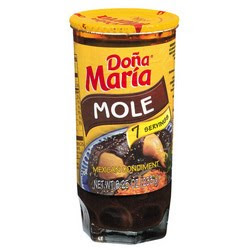
Of all of the culinary flavors I found my palette opening up to, one of the dishes I've found myself developing something of an obsession over in the last few months is molé. Prepared from a legion of ingredients (highlights include the aforementioned poblanos as well as roasted almonds, fresh tomatoes, a good amount of cumin and dark - NOT cocoa powder - chocolate melted in during the final stages of preparation) and requiring atleast three or four hours to complete if looking to lock in the authentic flavor and texture, molé is no small feat. Initially I became curious not only by my seeing it heavily featured in jarred form up the street at the Mexican grocer, but also because it was the pride and joy for Ignacio Suarez, the often pressed upon father in the now defunct dramedy Ugly Betty. Throughout the four seasons of the show, Ignacio spoke often and fondly about his beloved molé recipe and even went so far as selling it for a substantial amount of money during one of the later story arcs in the series.

One of those television parents you always wished you had.

A few months back, I was booked to do a dinner for a party of margarita guzzling bachelorettes who were looking to have a Mexican menu featured at their soiree. Figuring it was as good a time as ever to take a crack at molé, I made the suggestion - the hostess signed off on it excitedly and without hesitation - and proceeded to spend the week leading up to the event in my kitchen figuring out the best way to approach this sauce. Upon researching it, I found that many modern Mexican house holds have never even made the stuff, much less tasted it - an alarming thought when discovering upon further reading that molé is considered the national dish of Mexico.

After several passes, I eventually found a version of the sauce that I was content with and debuted it at the party to rave results. Since that party, I've had a container of molé in the refrigerator at almost all times in case of emergency cravings (having extra tortillas on hand proves useful in the event of). The sauce - so rich and flavorful - is certainly substantial enough to comprise a meal all its own. Spread over kale, black bean and potato enchiladas with a heaping side of mango and serrano really brings out the flavor in the molé and makes the entire dish pop. I can't think of a dish since the great risotto revolution of 2008 where I've been so smitten.

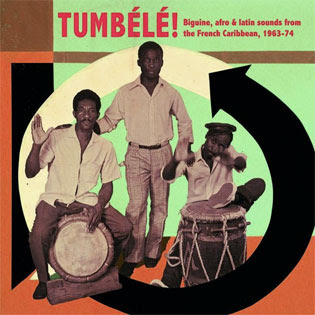
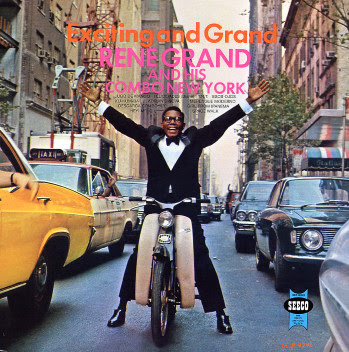
Lately, a large group of records have been giving me this same feeling - rich, textured and full of dimension - I've been spinning them nearly non stop. The first two are both released on the brilliant Soundway label. The first, entitled "Cartagena", acts as a more straight forward primer on the Latin sounds that were simmering in the 60's while "Tumbélé" takes those same Latin sounds and throws them into a blender with a heaping dose of various sounds from abroad. While the two were released separately, they could be listened to as companion pieces without issue. "Salsa Boricua De Chicago", a compilation by Chicago based the Numero Group pairs well with "Exciting and Grand" by Rene Grand and his New York Combo. The two present interesting contrasts to one another with Grand's Combo playing squarely in the more identifiable New York styled boogaloo sound of the time period while the Numero curated compilation sees its disparate set of acts playing in a much looser and funkier style. Where Grand's Combo plays the Cuban influence straight, the acts on 'Boricua" stray further into their homelands and abroad and at times even channel the steel drum band sounds from far off in Trinidad.


At the time of their release, all of these sides were pretty restricted to their local areas with Rene Grand perhaps receiving the most attention due to his being so closely aligned with the New York sound (the bands on 'Boricua' for example, stayed exclusively in Chicago and barely ventured outside of the city - copies of their recordings nowadays fetch high prices on numerous online auction sites). Much of the music found in this quadruplet of releases would be distilled down into a more pop friendly sound by the likes of Xavier Cugat and to a certain extent, even acts such as Sergio Mendes and Herb Albert (infusing equally watered down Brazilian elements) would play with many of the elements found in the fiercest Latin LP's. While releases by these acts fared better in the general market place (the glut of beat up copies of their LP's - Herb Albert especially - in every thrift store from coast to coast stands as testament to their flaky appeal), none of them could capture the raw, rough and tumble sound found on the original sides presented here on the releases highlighted.

While my knowledge of Latin and Cuban sounds is still in its infancy, I feel like I'm going to have a hard time finding records that top this particular batch. Forays into more streamlined salsa and merengue leave me cold as I've grown spoiled off of hearing the sounds on these LP's with their endless sides of speaker to speaker percussion tricks and playfully aggressive call and response vocalization. Much like the improvement of my molé recipe over time, I'm sure my knowledge of these genres will grow deeper and alongside that, my appreciation for the varying sounds I hear. A few years ago, I would have balked at the thought of picking apart Latin Boogaloo and early Salsa records, but now I can't figure out how I went so long without enjoying the stuff!

Now I want molé.


Wednesday, June 15, 2011

Afro Beat as Interpreted By A Half Korean White Guy

Back in my freshmen year of high school, I ordered a copy of 'Ball of Fire' by The Skatalites. Not knowing at all what I was in for (I mainly ordered it due to the inclusion of the word 'ska' in the band's name as my main infatuation at the time was tethered to all things Third Wave), I was shocked and disoriented upon first listen. The music had a swinging quality that I wasn't used to in *my* ska. Where were the punk rock guitars and the lyrics about beer? Were there even lyrics at all!? At the age of 14, hearing tried and true Jamaican ska played in all of its off beat and jazzy glory was very confusing as the closest thing I had been exposed to prior had been the light shades of influence found in lesser known No Doubt numbers. Over time, I came to love the record and through the years came to love all things traditional ska (this led me down the rabbit hole from rocksteady to roots to dub to dancehall and every niche thing in between from Don Drummond to Yellow Man - this of course is all something I'll discuss another time).

In hindsight, I recognize that this record probably laid the groundwork for the stuff I'm obsessing over nowadays with the Latin, Cuban and Afro inflections baked into that steady back beat I had grown to love at the time.

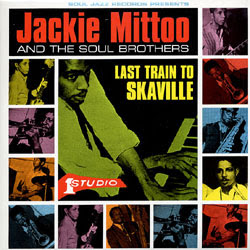
When I began my flirtation with Afro Beat and African rhythms several months ago, I figured my doing so was long over due. When you've spent years of your life immersing yourself in the Jamaican stuff, making the leap from one side of an ocean to another isn't all that hard - seeing the connection and similarities between the two kinds of music is even simpler. Modern Jamaican, Latin, African and Cuban music all bear so many similarities that picking the disparate elements between the lot of them can make for confusing fun (example: 'Afro Latin Soul' - the brilliant first out effort by Mulatu Astatke, a short burst of music so perfectly formed that my jaw drops every time the needle drops on the first groove. Mellie routinely walks past me on her way towards the kitchen and attempts to pick said jaw up from the floor occasionally. She's since given up after jaw met floor once more after each failed attempt). The latin and boogaloo influence can even be heard on efforts put out by Jamaican gurus such as Jackie Mittoo on his 'Train To Skaville'. When the record isn't utilizing Meters-esque chicken scratch guitar, its channeling Joe Cuba and all manner of Latin heat.

At first, I chalked my infatuation with these sounds up to the Humboldt Park neighborhood in which Mellie and I live. Sure the hipsters all like saying that *this* particular street is just *barely* Humboldt and may as well be Wicker Park, but with its melting pot of Mexican, Puerto Rican and African American residents, its impossible to get away from hearing all manner of sounds spilling out onto the streets year round like gallons of fresh lemonade being tossed from the second floor windows the sounds are originating from.

Pint Sized Plant Cultivators at The Campbell Garden Co-Op Just A Block Up The Street

As many of the residents in the neighborhood have resided here for decades, the music they enjoy (and loudly mind you, never - NEVER! - at a reasonable volume) aren't the Rihannas, 50 cents and various sundry reggaeton thumps their offspring tend to prefer. Afro beat, Latin boogaloo, Cuban shuffle, it's all there and it's all ever present - especially in the warmer months. At first I was put off by all of it due to the sheer volume and inconsideration of the folks blasting the stuff - as the years passed though (this is our third summer in the neighborhood), I began to realize that my opinions were really just grumpy and crotchety at best - a temperamental white guy holding unintended opinions loaded with stereotypes and inappropriate assumption. As my prejudices melted away, the aural flavors began to seep into my mind and the connection between the sounds I heard walking down the street compared to the Jamaican music I had always beloved began to click.

At first, I dipped my toe into the water by purchasing a pair of beat up Fela Kuti LP's. A short jaunt later, I found the Numero curated 'Cult Cargo: Grand Bahama Goombay" and further along the trail began to delve into the catalogues of re-issue labels such as Sound Way and Analogue Africa. My love for boiling rhythms firmly entrenched into both my buying habits and my turntable rotations, it wasn't long before the stuff was all I could listen to. It's only with recent reminders from my former infatuations with noise pop and garage rock that I've come out of the swimming pool long enough to step away (momentarily of course) and grab a towel.

Vampi Soul (one of the many re-issue labels recently saturating the market with exceptionally curated compilations of previously hard as hens teeth to find music) recently released a compilation of tunes by Segun Bucknor entitled 'Who Say I Tire?'. Despite the dubious sleeve notes (am I reading about Bucknor or Fela here? The author often vacillates between the two despite the comp being composed entire of music made by the first - lazy writing can be detected by the author's lifting of quotes from blogs and ten year old interviews as well), the tracks on this are all sublime. While I found myself growing irritated reading the sleeve notes, in all truth it can't be avoided - Fela Kuti was easily Nigeria's largest musical export. His children with varying degrees of success are still trying to capitalize on the classic output from the Africa 70 and Nigeria 70 eras their father is most remembered for. With such a large presence over shadowing everything else the country was known for musically (on par with how folks compare everything to the triumvirate of Elvis, The Beatles and Madonna in much of the Western hemisphere), it can't truthfully be helped that Bucknor will draw comparisons (their relation by way of being second cousins further links them). While Fela's output was exhaustive and prolific, Bucknor's limited material is certainly nothing to balk at.

The eight minute workout of 'Gbmojo' acts as a slow burning candle, from the first note to the last, the bass and drums pulsate around one another like a wick slowly working itself into nothingness. The overall feel of 'Who Say I Tire?' has a decidedly American feel to it. Where Kuti's band was all percussion circles and simmering instrumentation - much of the music Bucknor produces absolutely cooks in comparison. The shades of James Brown, Booker T and The MG's, Stax and even The Meters are impossible to overlook and certainly many of the breaks in this music would make mad fodder for beat makers should they be so clever to look Bucknor's music up and give it a few minutes to digest (it's a shock that beat wizards such as Madlib haven't jumped onto this shit already). While the elements of High Life and Juju are certainly there, the almost garage rock feel of the organ along with the shuffling drum kit and bubbling bass keep the music tethered on a short leash - the embellishments of tried and true Afro Beat are assuredly present and at moments, Bucknor's band cuts loose to let their jams flow free like agave nectar. Much of the time however, the cuts on 'Who Say I Tire?' show a disciplined restraint and the tension of the music itself works all the better as a result.

While it's tempting to say that Bucknor's music is more accessible due to its more readily hearable laundry list of American soul and funk based influences, it's not a means to dismiss the man's output as easily as some folks have done by leaving him as a footnote to Fela's throne. Certainly, the two sit comfortably on the shelf next to each other and more over, would flow near seamlessly if place within the same play list.

Assuming I don't get too many side ways stares, perhaps I'll dub a cassette copy of "Who Say I Tire?" and put it into the boom box the next time I'm sitting outside the apartment on the nearest stoop. I'd imagine the melodies will mesh finely with the neighborhood's atmosphere overall. Well, until some car goes careening by blaring the latest Gucci Mane joint while setting off three car alarms in its wake anyway...

Tuesday, June 14, 2011

The Changing Of Seasons

Growing up in Warner Robins, Georgia (a glorified suburb of the city of Macon and known as a hot bed for more than weather - Wartown's motto is "Every Day In Middle Georgia Is Armed Forces Appreciation Day"), my skin was used to heat. Having been born into a subtropical climate, I found my move to Chicago several years ago alienating. The summers were only mildly cooler than what I was accustomed to and while I welcomed the windy breezes, I was left cold by the onslaught of Winter. The first year was practically unbearable - many folks romanticize snow, what with all of the possibilities of snow ball fights and snow angels and all of that crap you see being pitched at you from any number of things starting at Charlie Brown Christmas Specials down to the half a dozen yearly romantic comedies utilizing Winter as their central climate. Me? No thanks.

With each passing year, my skin became accustomed to the frigid demons that inevitably came to snatch Fall from my grasp. As I adapted physically, so did my tastes. At first, I relied on the instrumental catharsis of acts like Explosions In The Sky to get me through the tundra of ice that had formed around my Uptown home. The following years were spent huddled in my Lakeview living room with three layers of clothing on while soothing myself to the frigid sounds of Scientist and King Tubby and all other manner of dub reggae malcontents. For many, reggae is synonymous with summer and certainly for me, I find rocksteady and early ska rhythms soothing during the warmer months - but the frozen echoes of guitar drop outs ping ponging across walls of ice solid bass prove perfect as an aural sound track to the time of year where the surrounding environment pulls no punches and acts as hatefully as a slighted ex lover.

Note Cox's heavy beige coat - us Southerners really can't stand the cold.

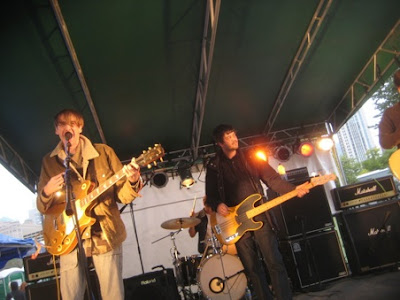
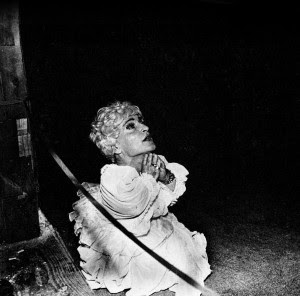
This past October, as the final fugues of Summer played themselves to the last and the chilly breath of Autumn began to set in and impose itself onto both myself and the just barely holding on windows of my Humboldt Park apartment, Mellie and I went to see Deerhunter play a show under an over pass (see above). While the desolate environment the show was being held within was suitable, the event itself was far from intimate as the audience numbered in the upper 100's due to sponsorship and advertisement from Urban Outfitters. Standing in one spot for over an hour and listening to the band play through the majority of their latest record Halycon Digest, I found myself getting lost in each note - a rare instance because as much as I love music, I honestly can't stand the majority of live shows I see (more on that some other time). Bradford Cox's voice acted as balm to the chilly weather encircling the lot of us as we stood and watched him and his bandmates slowly peel off song after song like layers of an onion. Each hit of the snare gave off visible waves of sound that mingled and corresponded with the notes of melody emitting from the amplifiers arranged across the stage.

As I stood there and listened, I got to thinking about the music and the process of its creation. Here are these Southern boys playing this cold and very chilly music and while certainly apt for the then current climate they were playing it within, did it disorient them to play it during the height of June or July? As time has gone on, Deerhunter have begun to emit a warmer center with each passing record, but it seems the lads live in an eternal state of Autumn and early Winter. Their releases certainly act as something of a metaphor for the changing of seasons. First release (and cheekily offensive) "Turn It Up Faggot" is all rage and hormones - a paean to the Rites of Spring. Their second recording, Cryptograms is awash in Georgia rain and scorching baked sun fall out. Like the flood of '93 (known to all Georgians older than 21 for the near unprecedented devastation it caused), its swaths of guitar feedback and discordant distortion wash over the listener in waves composed of equal parts heat and torrential bursting dams. The vinyl edition of the record has the Fluorescent Grey EP tacked onto the 4th side and provides fleeting relief from the grey clouds and echo driven rage of a very hard Summer. Cloaked in shimmering melodies and sounding very much like sunshine cracking through stubborn clouds, the EP gives testament to where the band would head next.

3-D Glasses not included.

The one two punch of Microcastle and Weird Era Cont. sees the band going in a more subdued direction and as hinted in the shifting tones of Fluorescent Grey, sees their descent into Autumnal tones of crisp clarity as melodies ring like clocks and drums clip by like the finest Neu. It's in these two recordings that we see the collective body heat of Deerhunter beginning to drop and change to varying shades of blue. It's with this record that the band also began to gain much of the following I would see at the 'secret' show Urban Outfitters sponsored under the over pass. Far more subdued than Cryptograms and considerably more polished, Microcastle in particular proved to be one of the strongest independent releases in some time and proved to be a gateway to the Winteresque soundscapes found on much of Halycon Digest. Only at the end of the record where saxophone lines weave in and out and Bradford Cox wails odes to the late Jay Reatard does Halycon see a subtle shift back towards spring, bringing the band full circle.


Side forays such as their Rainwater Cassette EP as well as their legion of side bands (The Lotus Plaza and The Atlas Sound being most notable at present) have shown Deerhunter's winter to have been a long one. With the final two numbers on Halycon Digest signalling a brighter turn on the horizon, perhaps they're coming out of their boarded up residences to explore the bright world outside.

With this year's weather being some of the most bizarre on record all across North America what with all of the blizzards, missed segueways from Winter into Spring and Spring into Summer as well as the now elevating heatwaves, perhaps the Southerners comprising Deerhunter will act as a metaphor for a seasonal change with their next batch of tunes (prolific as the lot of them are, it won't be long before we see new music squinting its eyes as it drinks in its first doses of daylight).

One can only hope anyway. After a long Winter and a barely there Spring, Summer days are just what we need.